Standard Ticket
Castle entry · standard queue
€42per person
Timed slot chosen at checkout
- Bran Castle entry — keep, royal apartments, courtyards, secret passage
- 5-minute audio history sent before your visit
- Booking handled in your own language
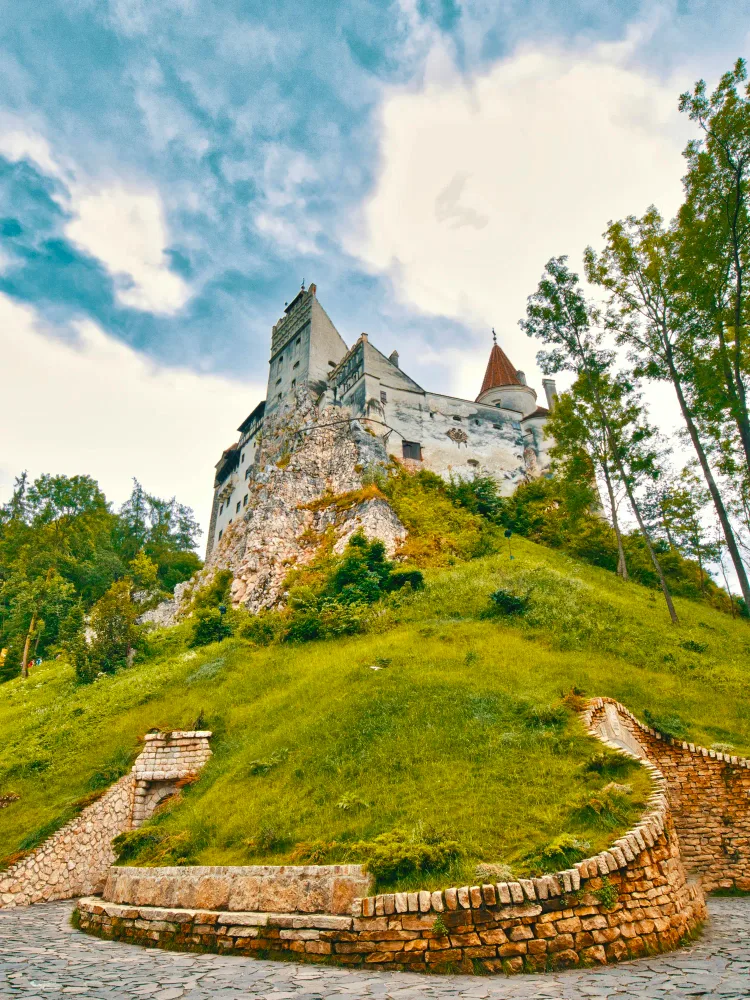
Transylvania, Romania
Bran Castle skip-the-line — the cliff-top stronghold 25 km from Brașov that Bram Stoker never saw but every Dracula reader pictures, then served as Queen Marie's royal residence between the wars. Timed slot reserved before peak-season days fill.
Tickets
Every ticket is the same castle: keep, royal apartments, courtyards and the secret passage. What changes is the queue. Choose your date and time slot at checkout; the narrow stairs cap how many go in at once.
Ways in
Castle entry · standard queue
€42per person
Timed slot chosen at checkout
Castle entry · skip-the-line
€66per person
Timed slot chosen at checkout
Castle entry · skip-the-line · live English guide
€80per person
Timed slot chosen at checkout
Children under 5 enter free and need no ticket.
Reduced entry, standard queue
The choke pointBran Castle's narrow stone staircases cap visitor flow. Peak-season days (July–August + late October Halloween week) sell out daily.
The castle
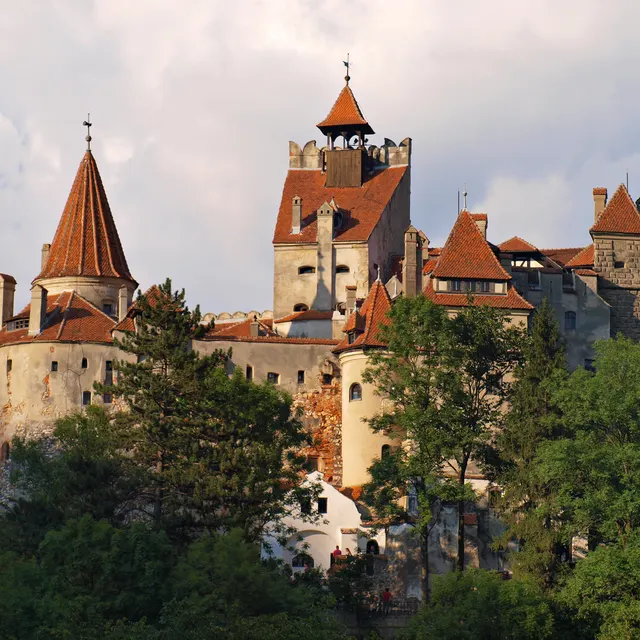
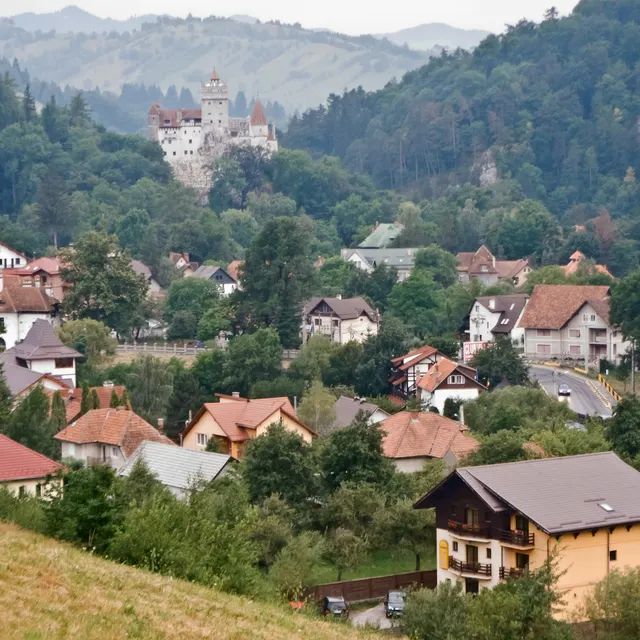
Bran Castle is the 14th-century stone fortress that international visitors most often associate with Bram Stoker's Dracula — though the historical record is more interesting than the marketing. Built from 1377 onward by the Saxons of Brașov as a defensive customs post on the mountain pass between Transylvania and Wallachia, it stands on a 200-foot rocky outcrop above the Bran Gorge, 25 kilometres southwest of Brașov in central Romania.
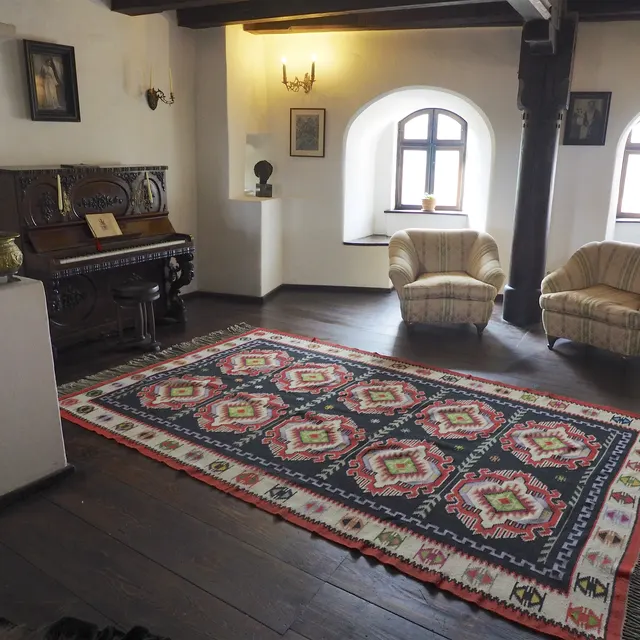
The castle's modern character comes from Queen Marie of Romania, who received Bran as a gift from the city of Brașov in 1920 and spent the next two decades transforming the medieval fortress into a personal retreat. The narrow rooms, painted ceilings, and collection of art and furniture you walk through today are her work, preserved as a museum since 2009 when the castle re-opened as Romania's first private museum under the heirs of the Habsburg royal family.
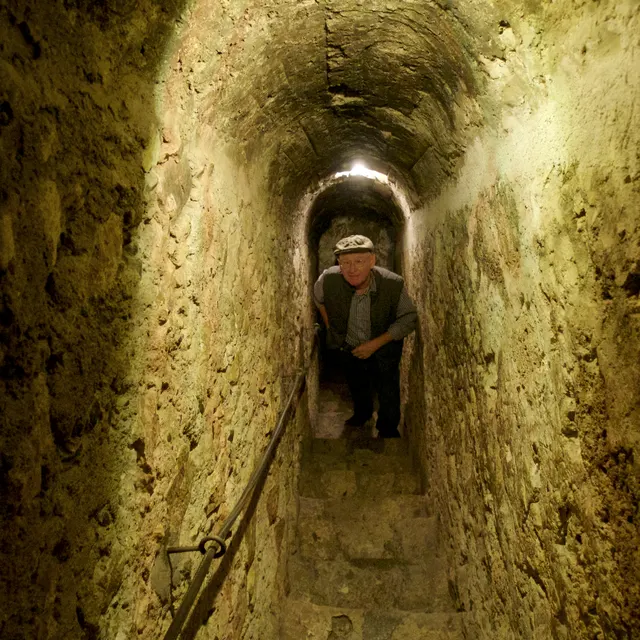
Visitors typically spend 1.5–2 hours inside, climbing the medieval staircases through royal apartments, secret passages, and courtyards. The Dracula association is acknowledged in a small basement exhibition; the rest of the castle is the real story — a customs fortress turned royal home turned national heritage site.
Two faces of one castle
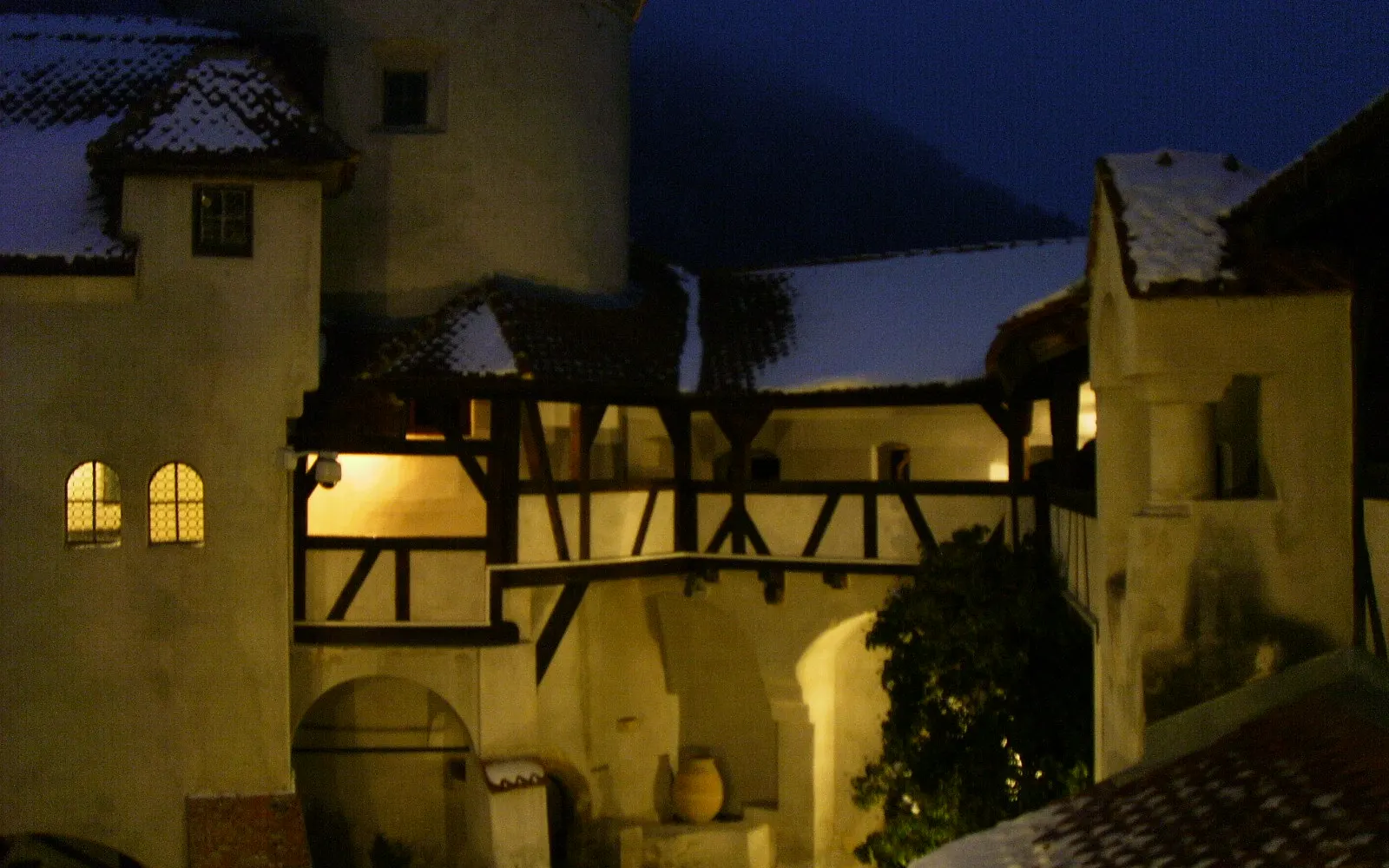
The Dracula idea
Bran Castle is universally marketed as Dracula's Castle, but the historical and literary record is more nuanced. Bram Stoker, the Irish author of the 1897 novel Dracula, never visited Transylvania — his research was done from books, maps, and conversations with the Hungarian-British academic Ármin Vámbéry. The castle Stoker described in the novel sits in the Borgo Pass in northern Transylvania, more than 200 kilometres from Bran; some scholars associate it with the now-ruined Poenari Citadel, others believe it is a composite of multiple sites, and many believe Stoker invented it whole-cloth. Bran Castle is not named in the novel.
The marketing association dates to the second half of the 20th century, when communist-era Romania promoted Bran as a Dracula-tourism magnet to bring in foreign currency. The castle's silhouette — turrets, narrow windows, dramatic clifftop position — fits the popular image of a vampire's lair, and the connection has been commercially valuable ever since. The current operators acknowledge the marketing relationship through a small basement exhibit on the legend, but the castle's interpretive focus is on its real history: medieval customs post, Saxon fortification, Queen Marie's royal residence.
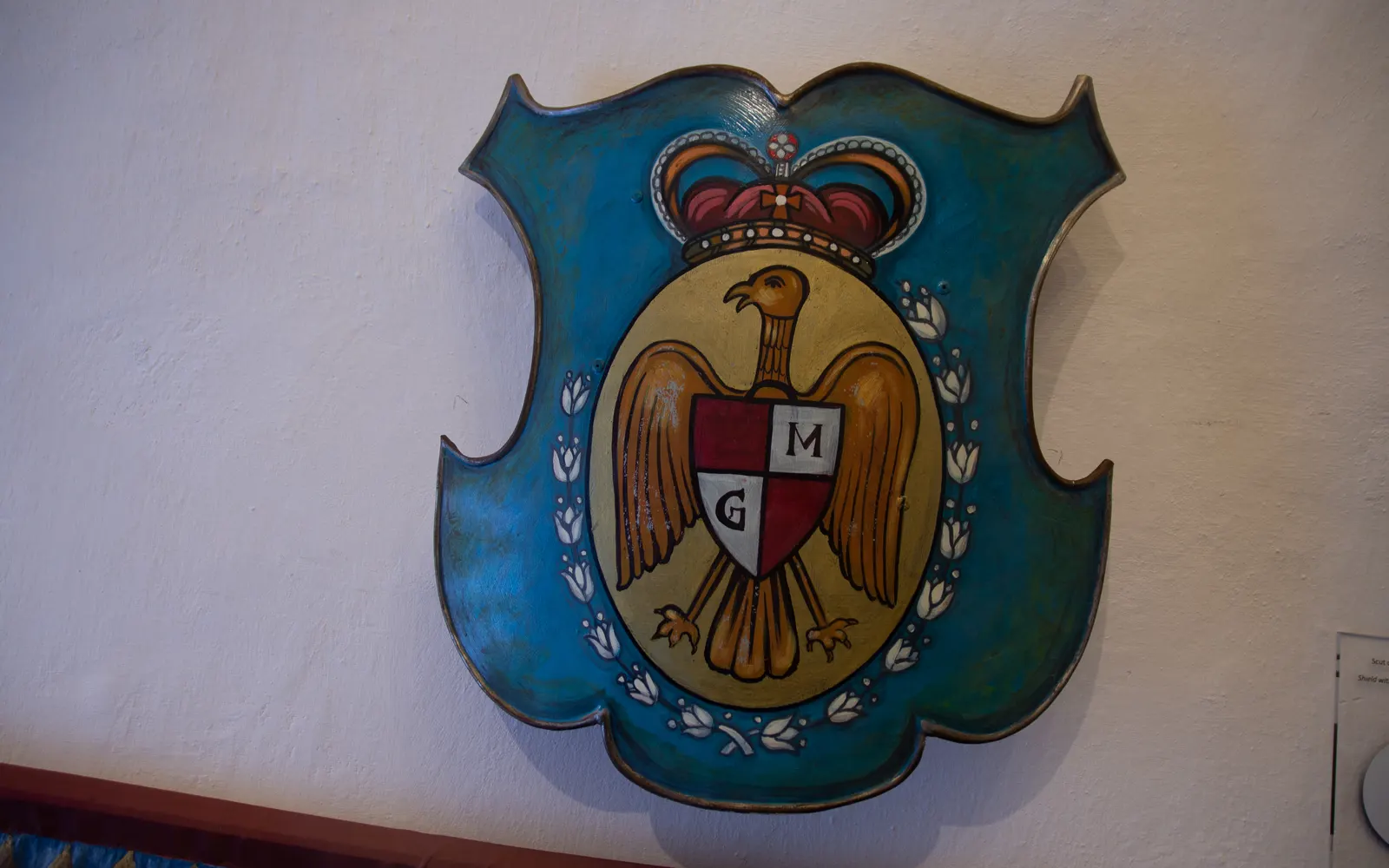
The Bran reality
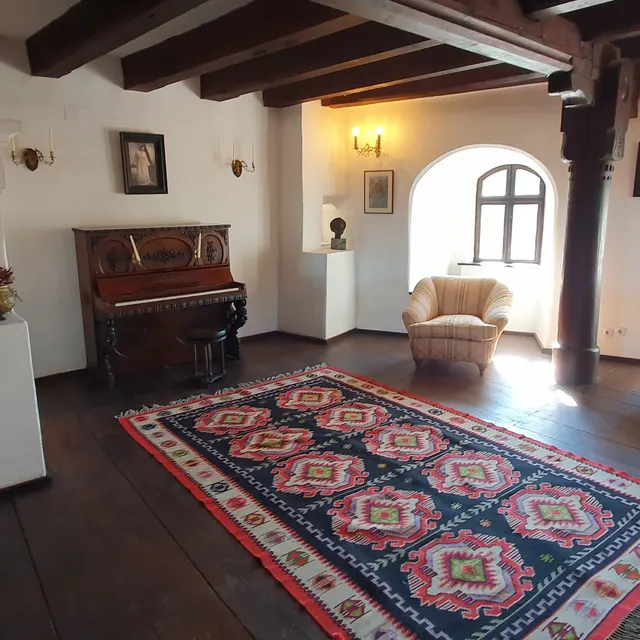
Queen Marie's stewardship transformed Bran from an abandoned medieval fortress into a comfortable royal home — and that transformation is what visitors actually see today. Born Princess Marie of Edinburgh in 1875 (granddaughter of Queen Victoria), she married Crown Prince Ferdinand of Romania in 1893 and became Queen Consort in 1914. After Romania's wartime alliance with the Allies and the postwar acquisition of Transylvania, Bessarabia, and Bukovina — which roughly doubled Romanian territory — the City of Brașov gifted Bran to Marie in 1920 as recognition of her central role in the diplomatic and humanitarian effort. She used the castle as her favourite retreat for the next 18 years, and her interventions are everywhere: the parquet floors, the small chapel near the inner courtyard, the secret passage opened up between floors, the painted-glass windows in the Music Salon, and the layout of the rooms themselves. Her heart was originally interred in a marble sarcophagus at the Stella Maris chapel below the castle in Balchik (then Romanian Bulgaria); it was moved to Bran's chapel after Bulgaria recovered the Quadrilateral region in 1940. Today's museum interpretation is built around her life and her curated furnishings.
Both are why people come. The rooms tell the real story.
Visitor guide
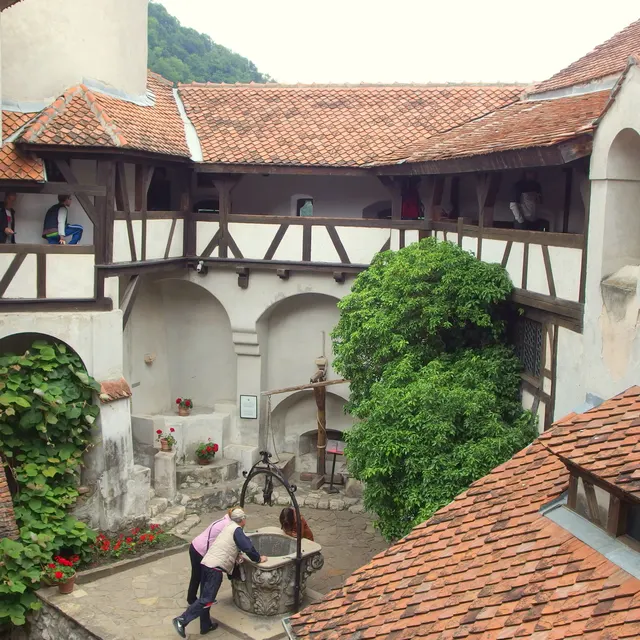
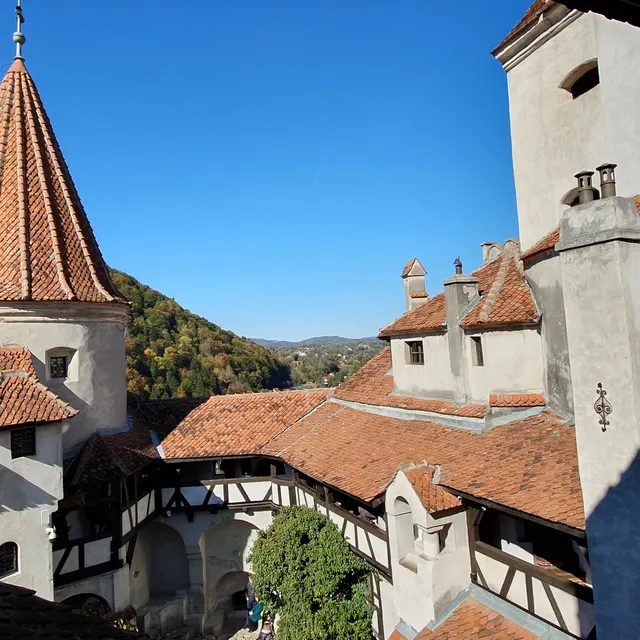
Four tiers of timber galleries ring the inner courtyard. The guide hangs from them: eighteen banners, tap one to unroll it.
Bran Castle is a 14th-century stone fortress in central Romania, perched on a 200-foot rocky outcrop above the Bran Gorge, 25 kilometres southwest of Brașov. Chartered in 1377 by Louis I of Hungary as a defensive customs post on the mountain pass between Transylvania and Wallachia, it served military and customs roles into the 18th century. In 1920 the city of Brașov gifted the castle to Queen Marie of Romania, who restored and refurnished it as a personal retreat over the following two decades. After 1948 the castle was nationalised by the communist regime; in 2006 a restitution law returned it to the heirs of Princess Ileana, and on 1 June 2009 it reopened to the public as Romania's first private museum under the administration of Archduke Dominic of Austria and his sisters. Bran is internationally recognised through its association with Bram Stoker's Dracula, but historians note the connection is tourism-driven: Stoker never visited Transylvania, the castle is not in the novel, and Vlad III (the historical Dracula) almost certainly was not imprisoned here.
Included with every ticket
A short, calm narrative — what this fortress actually is, why it isn't really Dracula's castle, why Queen Marie made it her summer home, and what to look for inside. Listen on the bus from Brașov.
Recorded for Bran Castle Tickets concierge. Free to download.What the five minutes cover
Practical
Tuesday–Sunday 09:00–18:00 (last entry); Monday 12:00–18:00. Hours apply year-round per the official operator. Confirm seasonal closures on the day of visit.
Strada General Traian Moșoiu 24, 507025 Bran, Romania
From Brașov: bus 60 from Autogara 2 (Brașov bus station 2) runs every 30–60 minutes, journey ~45 minutes. Private taxi from Brașov ~30 minutes. From Bucharest: rail to Brașov (~3 hours) then bus or taxi.
Medieval stone construction. The approach involves stairs and uneven cobbles; interior has narrow staircases between floors with no lift. Visitors with mobility limitations should contact the operator (+40 268 237 700) in advance.
Small bags allowed inside. Large backpacks must be checked at the entrance.
Personal photography permitted in courtyards and most rooms. Flash and tripods restricted. Specific exhibits may post no-photo signs.
Guides
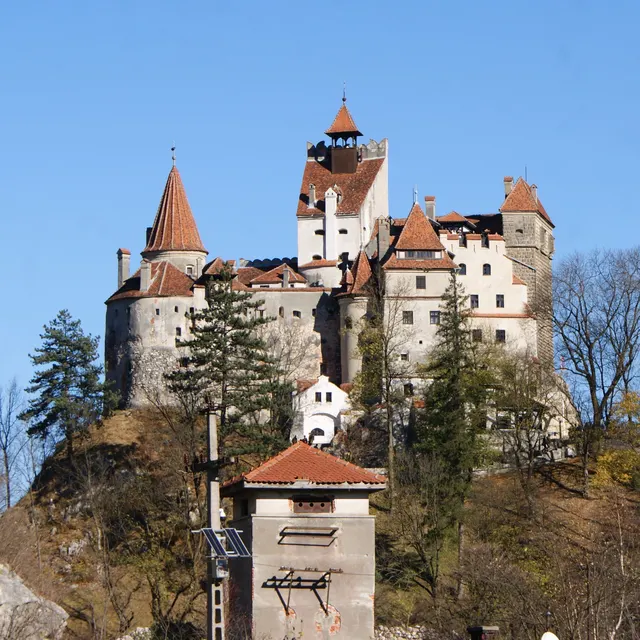 The Best Time to Visit Bran Castle: A Month-by-Month Guide 6 min · Read →
 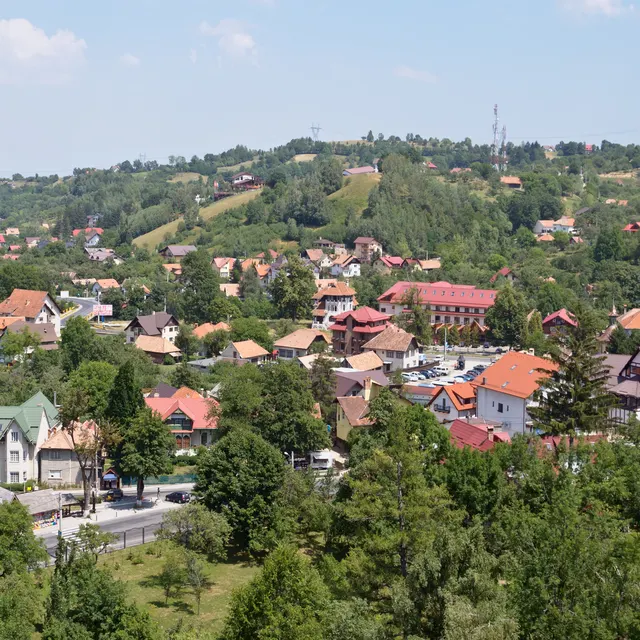 How to Get to Bran Castle from Brașov (and from Bucharest) 5 min · Read →
 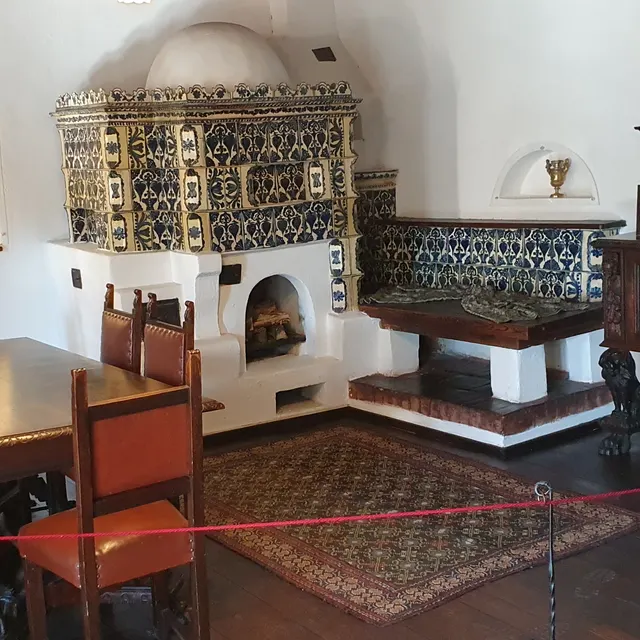 Bran Castle vs Dracula: The Real Story Behind the Myth 6 min · Read →
 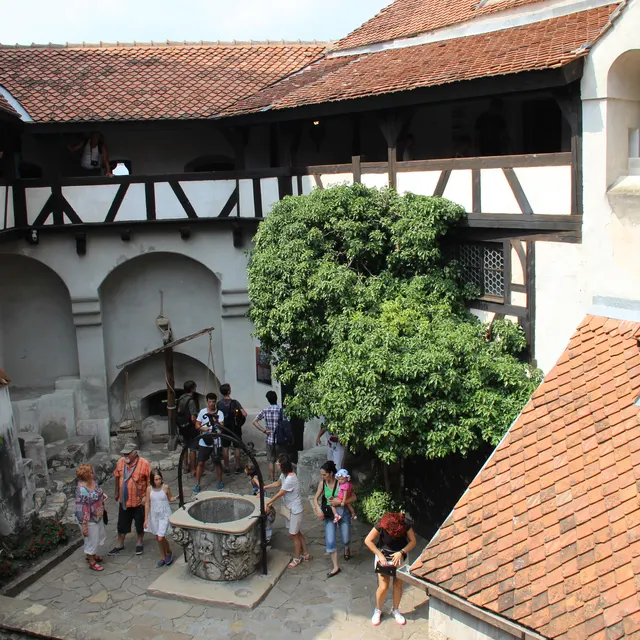 Bran Castle: History and Architecture from 1377 to Today 7 min · Read →
 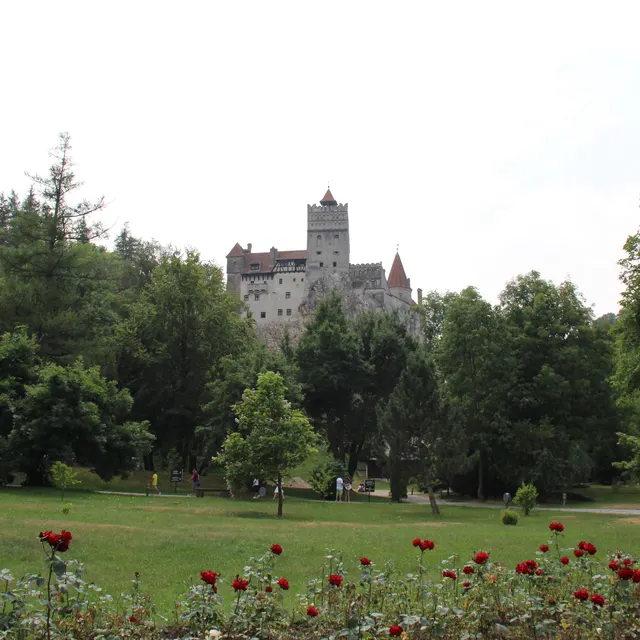 Bran Castle with Kids: A Concierge Family Guide 6 min · Read →
 Questions
Bran Castle is universally marketed as Dracula's Castle, but the historical record is more nuanced. Bram Stoker never visited Transylvania and the castle is not mentioned in his novel. Vlad III (the historical Dracula) most likely never lived here either — historians agree his imprisonment by the Hungarians in 1462 was at a fortress in Budapest, not Bran. The real history is the customs fortress turned royal residence — which is the more interesting story.
Entry to the castle keep, all open royal apartments, the inner and outer courtyards, the secret passage, and any current temporary exhibitions. Your timed slot is reserved before you arrive so you bypass the gate ticket queue.
10–15 minutes before your booked slot. Arriving earlier is fine but you won't be admitted before your time. Arriving late may push you to the next available slot, especially in peak season.
Plan on 1.5–2 hours inside the castle. Add 30 minutes for the souvenir village at the foot of the rock, where you'll find cafés and the famous (and very touristy) Dracula souvenir stalls.
Yes. Tuesday–Sunday 09:00–18:00, Monday 12:00–18:00. The operator may shorten hours on national holidays — confirm on the day if travelling on or near 1 December (Romanian National Day), Easter, or Christmas.
Bran is in the Carpathian foothills at about 760 metres elevation. Summers (June–August) are warm but afternoon thunderstorms are common. Winters (December–February) are cold with snow — the castle is more atmospheric, the village quieter. October Halloween week is the busiest single window of the year.
Once booked, slots are non-transferable and non-refundable. If you need to change, contact us at bookings@draculascastletickets.com — we'll help where we can but cannot guarantee a new slot in peak season.
Yes — children typically love the castle (turrets, secret passages, dramatic gorge views). Strollers are tough on the stone staircases; a baby carrier is more practical. Reduced-price tickets apply to ages 7–17.
No. Bran Castle is a 14th-century stone fortress with narrow medieval staircases between floors and no lift. Visitors with mobility limitations should plan to view the exterior from the souvenir village or contact the operator (+40 268 237 700) for advice.
Tickets are issued for a specific date and are non-transferable once issued. If your plans change, reply to your confirmation email at least 48 hours before your date and we will rebook your visit to any open slot in the operator's calendar.
Bran Castle is a medieval stone fortress in central Romania, perched on a rocky outcrop above the Bran Gorge roughly 25 kilometres south-west of Brașov in the Carpathian mountains. First documented in a charter of 1377, when Louis I of Hungary granted the Saxons of Brașov the right to build it, it served for centuries as a defensive stronghold and a customs post guarding the mountain pass between Transylvania and Wallachia. The fortress is internationally famous as the place popularly marketed as Dracula's Castle, after Bram Stoker's 1897 novel, though Stoker never visited Transylvania and the building is not named in his book. Its modern character owes most to Queen Marie of Romania, who received the castle as a gift in 1920 and converted the medieval fortress into a comfortable royal residence, filling its narrow rooms with art and furniture. Since 2009 it has operated as a museum, and visitors today walk through royal apartments, courtyards, a secret staircase and battlements overlooking the gorge below.
Bran Castle stands in Bran village in central Romania, roughly 25 kilometres (about 30 km by road) south-west of Brașov, which is the usual base for a visit. From Brașov, public bus line 60 departs from Autogara 2 (Bus Station 2, beside the railway station) every 30 to 60 minutes and reaches Bran in about 45 to 50 minutes, stopping a short walk from the castle. By car or taxi the same journey takes roughly 30 to 45 minutes along the DN73 road through Râșnov. Parking sits at the foot of the rock and in small car parks nearby, charged at a modest hourly rate that fills early on summer weekends and during Halloween week. Visitors arriving from Bucharest usually take a train to Brașov, about three hours through the Carpathians, then continue by bus 60 or taxi for the final stretch to the castle gate.
No. Bram Stoker never travelled to Transylvania or Romania, and he never saw Bran Castle. He wrote the 1897 novel Dracula from London, drawing on library books, maps and travellers' accounts rather than first-hand experience, and Bran Castle is never named anywhere in the text. The building the world now calls Dracula's Castle is a medieval stone fortress on a rocky outcrop above the Bran Gorge, roughly 25 kilometres south-west of Brașov, begun in 1377 by the Saxons of Brașov to guard the mountain pass between Transylvania and Wallachia. The link between Bran Castle and Stoker's vampire is tourism-driven, built up in the twentieth century around the castle's dramatic clifftop silhouette rather than any documented connection. The real interest lies in its centuries as a customs and defensive stronghold, and later as Queen Marie of Romania's restored royal residence between the wars.
No. Vlad III, the fifteenth-century Wallachian ruler remembered as Vlad the Impaler and the patronymic source of Stoker's Dracula, never lived at Bran Castle and was never imprisoned inside it. The persistent tour story that the Hungarians held him here after his 1462 capture is not supported by the historical record; contemporary sources place his imprisonment at the royal fortresses of Visegrád and Buda, near Budapest, not in the Carpathians. What is credible is that Vlad passed through the Bran Gorge during his campaigns, since the pass below the castle was the main route between his Wallachian lands and the Saxon towns of Transylvania. Bran Castle itself stood in Saxon Transylvania under Hungarian authority, working as a customs and defensive post rather than a princely seat. Travellers hunting the historical Vlad are better served by Poenari Citadel and by Sighișoara, his birthplace two hours north-west of Brașov.
Queen Marie of Romania made Bran Castle her favourite retreat for eighteen years, from the day the city of Brașov gifted it to her in 1920 until her death in 1938. A granddaughter of Queen Victoria, she received the medieval fortress in gratitude for her role in Romania's unification after the First World War, and she transformed it completely. Working with the Czech architect Karel Liman, she added heating, bathrooms and a lift, laid the parquet floors, opened a steep secret passage between levels, and filled the narrow rooms with icons, antique furniture and the painted-glass windows of the Music Salon. She used Bran most in summer, keeping other homes in Bucharest, at Sinaia and at Balchik on the Black Sea. Almost everything a visitor walks through today is the world she made, which is why the museum inside Bran Castle is built so closely around her life.
Plan on one and a half to two hours to walk through Bran Castle at an unhurried pace. The self-guided route climbs through roughly thirty rooms spread over four levels, linked by the narrow medieval staircases that give the fortress its warren-like character. You pass Queen Marie's royal apartments, the Music Salon and Library, the small chapel, and the steep secret passage that threads between floors, then step out onto the inner courtyard with its ancient well and the terraces overlooking the Bran Gorge. Visitors who read every exhibit panel and pause for photographs from the battlements stretch the visit to two and a half hours. The stone stairs are steep and uneven, so comfortable footwear matters more than time budgeting. Adding thirty minutes for the souvenir village at the foot of the rock rounds Bran Castle out to a comfortable half-day trip from Brașov.
Bran Castle sits about 25 kilometres south-west of Brașov, the town most visitors use as their base, in the Carpathian foothills of central Romania. The most economical way to cover the distance is public bus line 60, which departs from Brașov's Autogara 2, next to the railway station, every thirty to sixty minutes and reaches Bran village in around forty-five minutes, stopping a short walk below the castle. A private taxi covers the same route via the DN73 road through Râșnov in roughly thirty minutes and is a useful choice in winter, when snow slows the buses. From the drop-off in the souvenir village, a five-minute uphill walk on a paved, stepped path leads to the ticket gate. Travellers arriving from Bucharest take the train to Brașov, about three hours through the mountains, then continue to Bran Castle by bus 60 or taxi for the final stretch.
No. Bran Castle stays open every Monday, though it opens later than on other days. The Monday schedule runs from 12:00 to 18:00, while from Tuesday to Sunday the castle opens at 09:00 and takes its last entry at 18:00, the same timetable year-round. That late Monday start is worth planning around: the 12:00 opening deters the day-trip itineraries that pair a 09:00 castle visit with an afternoon at Peleș Castle, so a Monday early afternoon is quieter than a comparable weekday late morning. Across the week, the calmest moments are the opening hour and the final two hours before closing, once the coach groups from Brașov and Bucharest have moved on. The busiest stretch by a wide margin is the week around 31 October, when Bran Castle leans into its Halloween association and daytime crowds run several times above a normal shoulder-season day.
The Standard ticket covers the full castle — the keep, royal apartments, courtyards, and the famous secret staircase passage — and is the right choice for independent travellers who prefer to explore at their own pace. The Royal Tour + Fast Pass adds queue bypass at the entrance gate, which matters most during summer peak when gate queues can exceed 30 minutes; the castle circuit is otherwise self-guided. The Guided Royal Tour adds a live English-speaking guide for the full circuit — genuine historical context about Queen Marie's stewardship, the building's history as a Habsburg fortress, and an honest account of the Dracula myth's real and invented connections to the site. Dracula's Castle Tickets books all three options; if visiting in July or August the Fast Pass is worth adding, and if you want historical context and interpretation rather than a self-guided walk, the Guided Royal Tour is the one to book.
Bran Castle itself is not UNESCO-inscribed. The fortified Saxon villages of Transylvania (Viscri, Biertan, Prejmer, and others) within an hour's drive are inscribed.
Limited paid parking is available at the foot of the rock, fills early on summer weekends and Halloween week. Many visitors prefer the bus from Brașov to avoid parking pressure.
Yes — a 5-minute uphill walk on a paved path with steps connects the souvenir village (where buses and taxis drop you) to the castle ticket office.
Entry to the castle keep, all open royal apartments, the inner and outer courtyards, the secret passage, and any current temporary exhibitions. The audio guide is a separate paid supplement at the entrance.
Personal photography without flash is generally permitted in most rooms. Tripods, selfie sticks, and commercial photography setups are restricted. Specific exhibits may post no-photo signs.
No. Medieval stone construction with narrow staircases between floors and no lift. Visitors with significant mobility limitations can view the exterior and inner courtyard but the upper-level rooms are not accessible.
If the specific timed slot on your chosen date is sold out before we can secure it, we contact you within one business day to offer the next-closest slot. If no slot works, we refund you in full within 24 hours.
Standard tickets are self-guided — you walk through the rooms at your own pace. Private guided tours are available at higher price points directly from the operator.
Restrooms are available at the castle. Cafés and restaurants cluster in the souvenir village at the foot of the rock — quality is variable and tourist-priced; many visitors prefer to eat in Brașov.
Comfortable walking shoes (medieval cobbles and steep stone staircases). Layered clothing — the castle is unheated in places and 5–8°C cooler than Brașov in winter and shoulder months. A light waterproof shell is wise; the Carpathian foothills get unexpected showers.
Yes — children of all ages welcome and most enjoy the secret passage, courtyards, and gorge views. Strollers are impractical on the medieval staircases; a baby carrier is more useful. Reduced-price tickets apply for ages 7–17; under-7s are free.
For Halloween week (last week of October) and peak summer Saturdays, book at least 2 weeks ahead. Other peak-season days usually need 5–7 days advance. Shoulder months and winter weekdays can often be secured a few days out.
Yes — same Tue–Sun 09:00–18:00 / Mon 12:00–18:00 schedule year-round. Snow makes the castle look its most atmospheric. Bus services from Brașov can be delayed by mountain weather; budget extra return time.
No public-stay accommodation is available inside the castle itself. Several boutique hotels and guesthouses operate in Bran village within walking distance, and Brașov has a wide range of hotels 25 km away.
Prices are shown in full on the homepage ticket cards and are inclusive — the displayed price covers the timed-entry ticket plus our concierge service fee, disclosed inline at checkout. No hidden fees. Payment is taken in your local currency at the ticket price you see.
No. Vlad III Țepeș (Vlad the Impaler), the fifteenth-century Wallachian voivode whose patronymic Dracula inspired Stoker's character, never owned, lived in, or governed Bran Castle. He was based in Wallachia, south of the Carpathians, while Bran sat in Saxon Transylvania, then under Hungarian rule. The historians' consensus is that he may have passed through the region as a traveller or as a captive of the Hungarian crown for a short period in the 1460s, but there is no evidence — documentary or archaeological — that he was ever held at Bran specifically. The Vlad-was-imprisoned-here claim is a tour-guide flourish, not history.
It exists because Bran Castle has the silhouette tourists expect a Transylvanian castle to have, and twentieth-century film and tourism marketing closed the loop. Once enough Hollywood Dracula films pictured a craggy clifftop castle with narrow towers, the international audience looked at Romania's actual castle inventory and chose the best visual match. Bran was the obvious candidate. The operator did not invent the association — it simply chose, after the 2009 restoration, to acknowledge the marketing reality with a small Dracula-themed exhibit while keeping the bulk of the museum focused on Queen Marie and the medieval interior.
Bran Castle is privately owned by descendants of the Habsburg-Lothringen family — specifically the grandchildren of Princess Ileana of Romania, daughter of Queen Marie. After the Romanian state returned the property in 2006 under post-communist restitution laws, the family reopened it as a private museum in June 2009 through their company Compania de Administrare a Domeniului Bran. Dominic von Habsburg, an architect based in the United States, is the most publicly visible of the heirs. The Habsburg-Lothringen family does not live in the castle; admission revenue funds conservation.
As far as publicly available information indicates, yes — the Habsburg-Lothringen heirs remain the legal owners and operators of Bran Castle. There have been periodic public discussions about whether the Romanian state should repurchase the property or enter a long-lease arrangement, and one widely-reported family offer to sell was made in the early 2010s without a buyer emerging at the asking price. Day-to-day, the visit experience is unaffected: the castle operates as a fully open public museum under stable private ownership.
They are sister royal residences of the late Romanian monarchy, an hour apart by road. Peleș Castle in Sinaia was built by King Carol I in the 1870s–1880s as a neo-Renaissance summer palace and was the Romanian royal family's principal mountain residence. Bran came into royal hands four decades later when Brașov gifted it to Queen Marie. The two castles complement each other architecturally: Peleș is grand, late-nineteenth-century, Bavarian-inspired; Bran is medieval Saxon stonework re-imagined as a personal retreat. Most international visitors who plan a two-day Carpathian itinerary see both.
Yes — they are fifteen minutes apart by road and complement each other well. Râșnov is a peasant-built hilltop refuge fortress restored over the past decade, reached by a short funicular from the village below. The two together give a fuller picture of how Transylvania's Saxon communities organised their defences: Bran the toll-collecting outpost on the trade road, Râșnov the inland refuge town. A relaxed half-day at each is comfortably possible if you start at Bran when it opens and move to Râșnov in the early afternoon.
No. The Halloween programme — typically on or around 31 October — is a separately ticketed evening opening with the castle staying open after dark, the interior lit by candle and lantern, costumed performers in key rooms, and a tightly capped guest list. Tickets sell out months ahead, allocations are released on the operator's own timeline, and the experience is theatrical rather than horror-themed. Concierge support is genuinely useful for this specific night because the on-sale window is short and the system runs in Romanian by default.
No. Bran Castle is a classified national monument under Romanian Ministry of Culture heritage law, but it is not on the UNESCO World Heritage list. UNESCO sites near Bran do exist: the fortified Saxon churches of southern Transylvania, the historic centre of Sighișoara (where Vlad III was born), and further north the wooden churches of Maramureș. Many international visitors combine Bran with one or more of these inscribed sites for a richer Carpathian itinerary.
Largely yes. The operator's permanent exhibits focus on Queen Marie, the medieval Saxon fort, and the personal history of the Habsburg-Romanian royal connection. The Dracula content is contained to a discreet basement exhibit and to the seasonal Halloween programming. Walking the rooms in normal daytime mode you will see Queen Marie's writing desk, period furniture, the small chapel, and family photographs long before you see anything explicitly Stoker-related. The castle is, in practice, a royal-residence museum that markets itself with a horror-novel association.
Sources: bran-castle.com, en.wikipedia.org Last reviewed: